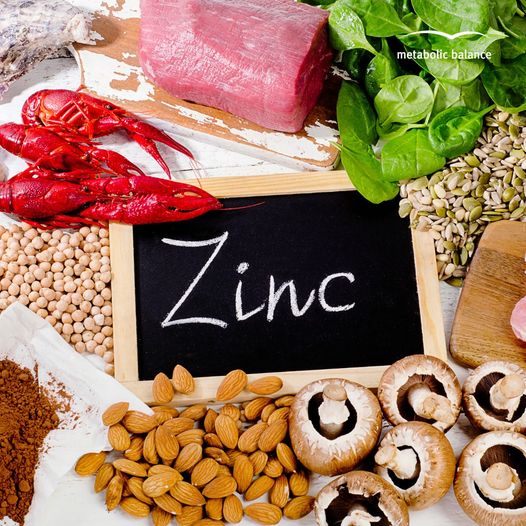
With the cold and flu season in full swing, supporting your immune system with trace elements such as zinc is critical! It supports wound healing, promotes vision in combination with vitamin A, controls hormonal balance, promotes regeneration of skin and hair, supports the pancreas in the production of insulin and finally, zinc strengthens the immune system by performing important functions in the production of defense cells. Zinc deficiency can be prevented by including more often red meat, seafood, dairy products, wheat germ, oatmeal, Brazil nuts, mushrooms and lentils in the diet.
Did you know Metabolic Balance plays a key role in supporting immune health? In the winter time immune health is especially important! Providing a personalized nutrition plan tailored to your body’s needs ensures you receive the essential nutrients your immune system requires to function at its best. A diet rich in vitamins, minerals, and antioxidants helps strengthen your body’s natural defenses, making it more resilient against infections and illnesses. It’s all about eating right to look your best and feel your best, too!
Brighten up your meals with colorful veggies like bell pepper and carrots! These vibrant vegetables are loaded with antioxidants like beta-carotene and vitamin C, which help protect your cells and boost your immune system. You can toss them in stir-fries, add them to soups, or enjoy them raw with hummus for a delicious, nutritious snack. Especially in the winter time increasing your intake of colorful veggies rich in vitamins and minerals can ensure that your immune system is functioning at full strength.
Boost your wellness with zinc! This essential mineral plays a crucial role in Metabolic Balance by supporting your immune system, aiding in cell growth, and helping to balance hormones. Especially as we enter the winter time and see higher incidence of respiratory viruses, zinc can be great immune supporter. You can find zinc-rich foods like pumpkin seeds, chickpeas, nuts, and seafood such as oysters and shrimp.
Don’t hit the vitamin C snooze button! With the flu season fast approaching it is important to make sure your immune system is firing on all cylinders. Vitamin C supports a robust immune system and helps protect cells from damage caused by free radicals while supporting healthy skin, joints, and cardiovascular health. Including Vitamin C-rich foods such as citrus fruits, berries, kiwi, peppers, and leafy greens can help optimize your nutrient intake and promote optimal health!
In the winter months viruses such as RSV, the flu, and SARS-CoV-2 spread rapidly and many of us get sick! The best solution for great health is to prevent getting sick in the first place, and certain foods can help you do that by boosting your immune system.
If you’re looking for food to help keep your family healthy during flu season, make sure to include these eight powerful immune system boosters on your grocery list.
✅ Citrus fruits
✅ Broccoli
✅ Garlic
✅ Ginger
✅ Spinach
✅ Turmeric
✅ Papaya
✅ Kiwi
Variety might be the spice of life, but it’s also the secret to good nutrition. Including one of these in your diet often won’t be enough to help fight off the flu or other infections, so ensuring you get a well-rounded mix is key.
Pay close attention to serving sizes and suggested daily intake to avoid getting too much of one vitamin and too little of others.
Some people catch every virus and seem to move from one cold to the next. They are susceptible to infections because their endogenous defenses are weakened. To prevent major illnesses from developing, it is important to strengthen the immune system.
If you want to strengthen your immune system in the long term, you should think about your diet first and foremost. Studies show that vitamins A, C, E and beta-carotene in particular, as well as the trace elements zinc and selenium and secondary plant compounds play a key role. These micronutrients activate the immune cells, stimulate the formation of antibodies and also influence the production of natural killer cells. In concrete terms, this means including more fresh fruit and vegetables (depending on the season), pulses (beans/lentils) and nuts in the diet, and seasoning with ginger, turmeric and chili, because the essential oils have an immune-stimulating and anti-inflammatory effect.
Do you know how closely your body weight and your immune system are connected? In simple words it can be said that a healthy body weight and balanced diet usually increases defense strength – register for our free Information event to learn how Metabolic Balance can help!
How blood sugar goes into a tailspin during infections
Welcome to the flu season! Many are now plagued by flu, colds and sore throat. The change from wetness, coldness and dry heating air causes problems for our mucous membranes. The cold viruses are wreaking havoc – whether at work, on public transportation, the subway or while shopping. It doesn’t take long to catch a cold.
For healthy people with a strong immune system, a cold is usually just a trifle. But not for diabetics and people who have already developed insulin resistance. In this case, flu infections can have unpleasant consequences.
Whether cold, flu or gastrointestinal infection – for diabetics this means additional stress. In addition to the “fight” against bacteria and viruses, blood sugar also gets into the mix.
High blood sugar values block the immune system
Increased blood glucose levels, as scientists have been able to demonstrate, have a strong influence on the functioning of the immune system. For example, the scavenger cells are restricted in their work, i.e. unwanted viruses and bacteria cannot be trapped and eliminated by the scavenger cells with the usual speed. The migration of the defense cells to the affected tissues or to the lymph nodes, which also support the defense, is also impeded with high sugar levels.
High blood sugar levels are also responsible for the skin and mucous membranes being drier and often poorly supplied with blood. As a result, the skin barriers are weakened and pathogens can overcome them more easily and penetrate the body, where they multiply quickly.
Blood sugar fluctuations due to infections
When the immune system is fighting viruses or bacteria, fever often occurs as an accompanying symptom, which leads to an increased need for insulin. What is the connection here? Well, once the body has recognized a foreign body such as a virus, it tries to fight it off with all its might.
The metabolism really revs up and releases stress hormones such as adrenaline and cortisol. At the same time, other endogenous substances are formed to fight against unwelcome bacteria and viruses. These processes cause the body temperature to rise. Fever develops and viruses and bacteria, which consist of protein, can be killed by the heat.
To generate the heat, the body mobilizes its energy reserves, which are stored in the liver and muscle cells in the form of glycogen. In this process, the stress hormones and the hormone glucagon are instrumental in stimulating the liver to release glucose, which causes the blood glucose level to rise. As a result, insulin levels also rise, because insulin is needed to open the door to the cells so that blood glucose can be absorbed and burnt in the cells. As body temperature increases, so does the need for insulin, which is not a problem for an otherwise healthy organism. For a diabetic, however, this means that blood glucose must be monitored closely in order to be able to react quickly to fluctuations. If insulin resistance already exists, but diabetes has not yet been diagnosed, this can also seriously upset the metabolism.
Although infections generally raise blood sugar levels, there is a risk of drops in the case of a gastrointestinal flu. Vomiting or diarrhea compromises the absorption of carbohydrates. If there is too much insulin, but the person does not eat or vomits the food eaten, hypoglycemia can result. The severity of this depends on insulin sensitivity.
Prevention and strengthening the immune system
Unfortunately, you cannot prevent a cold completely, but you can strengthen your immune system. Those who exercise a lot and are also in the fresh air, who also observe hygienic rules of behavior such as keeping their distance, washing hands, etc., are already doing a lot for their health.
Nutrition is also crucial for physical well-being and a strong immune system. A predominantly alkaline diet provides true nutrient boosters to strengthen the immune system. It consists of lots of vegetables, herbs, legumes and nuts and is rich in antioxidant vital substances. Numerous studies show that especially vitamins A, C, D, E and beta-carotene, but also the trace elements zinc, iron and selenium as well as secondary plant compounds are essential for an active and strong immune system. These micronutrients activate the immune cells, stimulate antibody formation and also influence the production of natural killer cells.
Therefore, the Metabolic Balance nutrition plan is ideal. It provides a portion of alkaline foods three times a day, thus supplying the body with sufficient amounts of all vital nutrients. In addition, spices such as ginger, turmeric and chili with their essential oils strengthen the immune-stimulating effect.
Unfavorable food combinations or overeating can harm the body’s defenses, as necessary nutrients for an intact immune system are missing.
It is undisputed that we need sugar for our metabolism – but the guiding principle “the dose makes the poison” applies more than ever. When selecting carbohydrates and thus also the available sugars, be sure to choose natural products with long-chain carbohydrates and a high fiber content to achieve a slow rise in blood glucose levels. These foods are richer in vital nutrients compared to refined and highly processed foods, keep blood sugar at a healthy level, and provide long-lasting satiety and fullness.
Plenty of exercise and sufficient sleep
In addition to a diet rich in vital substances, moderate endurance activity such as long walks, hiking or cycling are suitable for supplying the body with sufficient oxygen and with that also strengthening of the immune system. Another guarantee for a healthy, strong immune system is restful sleep. When we feel unwell, a flu is on the way or we are simply tired, the need for sleep often increases significantly. The advice “sleep yourself well” does not come by chance. During sleep, the immune system works at full speed. Studies show that natural killer cells and phagocytes are more active during sleep and thereby protect the body. Stress hormone levels also drop during sleep, which also has a positive effect on blood sugar levels. A lack of sleep can therefore impair the functioning of the immune system and is partly responsible for blood sugar fluctuations.
The metabolism in balance
Diabetes is a metabolic disease that you do not necessarily have to be defenseless against. Many people do not even know that they are already in the early stages of diabetes. “Pre-diabetes” is on the rise worldwide. But with the right diet you can do a lot for your own health. A Metabolic Balance diet enables the body to produce the correct quantities of the enzymes and hormones that are important for its metabolic functions, and thus influence insulin secretion in a natural way – without having to sacrifice taste and enjoyment. With the help of nutrition according to Metabolic Balance guidelines, it is possible to keep the insulin level in the body constantly low and at the same time strengthen the immune system in a natural way.
Sources:
Heidemann C & Scheidt-Nave C. Prävalenz, Inzidenz und Mortalität von Diabetes mellitus bei Erwachsenen in Deutschland – Bestandsaufnahme zur Diabetes-Surveillance. Robert Koch-Institut: Journal of Health Monitoring 2017
Hemmingsen, B. et al.: Diet, physical activity or both for preventionnor delay of type 2 diabetes mellitus and its associated complications in people at increased risk of developing type 2 diabetes mellitus. In: Cochrane Database Syst Rev. 2017
Jacobs, E. and Rathmann, W.: Epidemiologie des Diabetes. In: Diabetologie und Stoffwechsel 2017; 12(06): 437-446.
Did you know how closely your body weight and your immune system are connected? In simple words it can be said that a healthy body weight and balanced diet usually increases defense strength, whereas an overweight organism is often susceptible to infections. The more overweight a person is, the more drastic is the effect on the immune system. Obesity and visceral abdominal fat often cause chronic inflammatory processes that put so much strain on the immune system that there is no strength left to fight off the autumn and winter viruses! One of the best ways to strengthen your immune system is to eat a balanced diet personalized to your body such as a personal Metabolic Balance nutrition plan.






 Metabolic Balance Blog
You must be logged in to post a comment.